17 Oct
Quick Answer: Should You Get a Second Opinion From a Dentist?
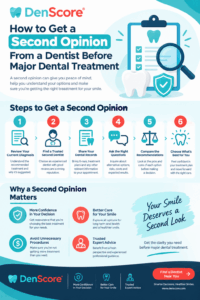
Yes. A second opinion from a dentist is a standard, sensible step before any expensive, invasive, or irreversible treatment, such as a tooth extraction, dental implant, root canal, or full-mouth reconstruction. To get one: (1) ask your current dentist for copies of your X-rays and treatment plan, (2) choose a general dentist or the right specialist, (3) book a consultation and say clearly that it is a second opinion, (4) bring your records, health history, and a list of questions, and (5) compare both plans before you decide. Expect to pay roughly $50 to $200 for the visit, although some offices offer free consultations.
Key takeaways
- A second opinion is not an insult to your dentist. Good dentists expect and respect it.
- It matters most for extractions, implants, root canals, crowns, and large treatment plans.
- You have a right to your own dental records, including X-rays.
- Ask whether a more conservative option exists and what happens if you wait.
- If both opinions match, you can proceed with confidence. If they differ, a third opinion or a specialist can break the tie.
Is a Second Opinion From a Dentist Worth It?
In most cases, yes. If you have ever asked yourself, “is it worth getting a second opinion on dental work?”, think about what is at stake. Major dental treatment is expensive, it can take months, and some of it cannot be undone. A tooth that is extracted cannot be put back. A root canal and crown can cost far more than a filling. A full-mouth plan can reach into the tens of thousands of dollars.
A second opinion costs a small fraction of that, and it gives you three things:
- Confirmation. If a second dentist reaches the same conclusion, you can move forward knowing the recommendation is sound.
- Alternatives. Dentists differ in training, experience, and philosophy. One may recommend removing a tooth, while another may suggest saving it with a crown or a root canal.
- Clarity on cost and timing. You learn whether the work is urgent, whether it can be staged over time, and whether the quoted price is in line with other offices.
Dentistry is not always black and white. Many conditions, such as early decay, borderline gum disease, or a cracked tooth, can reasonably be treated in more than one way. Hearing a second professional explain the options helps you choose the one that fits your health, budget, and goals.
When Should You Get a Second Opinion Before Dental Treatment?
You do not need a second opinion for every cleaning or small filling. Consider one when the treatment is:
- Irreversible, such as pulling a tooth
- Expensive, such as implants, bridges, crowns on several teeth, or full-mouth rehabilitation
- Invasive, such as oral surgery, bone grafting, or gum surgery
- Unexpected, for example if you were told you need major work after a routine visit with no pain
- Time-pressured, if you feel rushed to sign or pay immediately
Second Opinion Before Tooth Extraction
A tooth extraction is the most common reason people look for a second opinion, and it is one of the most important. Once a tooth is gone, you may need an implant, bridge, or partial denture to replace it, and each option brings added cost and maintenance. A second dentist may be able to tell you whether the tooth can be saved with a root canal, a crown, or gum treatment.
Second Opinion for Implants and Bridges
Implants involve surgery, healing time, and a significant investment. A second opinion can confirm that you are a good candidate, that you have enough bone, and that the proposed number of implants is truly necessary.
Second Opinion for Root Canals and Crowns
If one dentist recommends a root canal and another suggests monitoring, the difference can save you money and discomfort. An endodontist, who specializes in root canals, can often give a precise answer using advanced imaging.
Second Opinion for Full-Mouth Reconstruction or Cosmetic Plans
Large plans combine many procedures. A second opinion helps you see which parts are urgent, which are optional, and how the work should be sequenced.
Should I Get a Second Opinion Before Tooth Extraction?
In most non-emergency situations, yes. Here is a simple way to decide.
Get a second opinion before tooth extraction if:
- The tooth is not causing severe pain or swelling
- You were told it must come out but were not offered alternatives
- The extraction is being recommended alongside an implant package
- The tooth is a front tooth or a molar that affects chewing
- You feel unsure or pressured
You may not want to delay if:
- You have a spreading infection, facial swelling, fever, or trouble swallowing or breathing. These are medical emergencies, so seek urgent care right away.
- A tooth is so badly fractured that it cannot be restored and is causing severe pain
If you are unsure whether your situation is urgent, call the second office, describe your symptoms, and ask whether you can be seen quickly. Many offices keep same-week appointments for second opinions.
Can a Dentist Pull a Rotten or Broken Tooth?
Yes. Dentists can and do extract decayed, rotten, or broken teeth. The more useful question is whether they should. Sometimes a badly decayed tooth can still be saved with a filling, root canal, and crown. Other times the damage extends below the gum line, and removal is the better choice. A second opinion helps you confirm which category your tooth falls into.
Are Decayed Teeth Easier to Extract?
Not always. A tooth weakened by decay can become brittle and may break during removal, leaving fragments in the jaw. When that happens, the dentist may need a surgical extraction, which can involve a small incision and sectioning the tooth. A healthy tooth with strong roots can sometimes be more predictable to remove. How easy an extraction is depends on the tooth’s position, root shape, bone density, and the extent of the damage, so a clinical exam and X-ray are essential.
How to Get a Second Opinion From a Dentist: Step by Step
Getting a second opinion is easier than most people expect. Follow these steps.
Step 1: Request Your Dental Records
You have a legal right to copies of your dental and medical records. In the United States, this right is protected under federal privacy rules. Ask your current dentist’s office to email or transfer your:
- X-rays and any 3D imaging
- Periodontal (gum) charting
- Treatment notes
- The written treatment plan and cost estimate
Some offices charge a small processing fee. Asking for records is routine, and you do not need to explain your reasons in detail. Simply say you would like copies for your files.
Step 2: Choose the Right Provider
Decide whether a general dentist or a specialist is the better fit:
- General dentist: Good for fillings, crowns, simple extractions, and overall treatment planning.
- Endodontist: A root canal specialist. Ideal when your plan involves a root canal or retreatment.
- Periodontist: A gum and bone specialist. Helpful for gum disease, gum recession, and implant planning.
- Oral and maxillofacial surgeon: Best for complex extractions, wisdom teeth, bone grafting, and implant surgery.
- Prosthodontist: A specialist in crowns, bridges, dentures, and full-mouth rehabilitation.
You can find options through recommendations from friends and family, your dental insurance provider’s directory, local dental associations, and online dentist guides and reviews.
Tip: Choose a dentist who is not connected to the first office. An independent view is the whole point.
Step 3: Book the Consultation
When you call, say clearly that you are coming in for a second opinion on a proposed treatment plan. Ask upfront:
- Is there a consultation fee?
- Will the visit include an exam and X-rays?
- How long is the appointment?
- Can I send records ahead of time?
Step 4: Decide How to Present the Plan
You have two good options.
Option A: The independent diagnosis. Let the second dentist examine you and form their own conclusion without seeing the first treatment plan. This avoids bias, and if both dentists independently reach the same diagnosis, that is strong confirmation.
Option B: The side-by-side comparison. Bring the written plan and let the second dentist respond to it directly. This is faster and works well when you want a clear yes or no on a specific procedure.
If you are unsure, Option A is often the most revealing. You can share the original plan after the exam.
Step 5: Attend the Visit Prepared
Bring your records and questions (see the checklist below), be honest about your symptoms and health history, and take notes. Ask the dentist to explain anything in plain language.
Step 6: Compare, Reflect, and Decide
Lay both plans next to each other. Compare the diagnosis, recommended procedures, urgency, alternatives, cost, timeline, and long-term outlook. Do not feel pressured to decide the same day. Also remember that the cheapest plan is not automatically the best, and the most expensive is not automatically the safest.
What to Bring to a Dental Second Opinion Appointment
Come prepared so the dentist can give you a useful answer:
- Copies of your X-rays and any imaging
- The written treatment plan and cost breakdown
- A list of your current medications and your health history
- Your dental insurance information
- A written list of questions
Questions to Ask the Second Dentist
Good questions turn a quick visit into a clear decision. Bring this list:
- What specific problem are we trying to solve? Make sure the diagnosis is clear and that you can see it on your X-ray or in your mouth.
- Is this treatment urgent, or can it be safely delayed or monitored? Some conditions can be watched for months or years.
- Are there more conservative alternatives? For example, a crown instead of an extraction and implant.
- What happens if I choose to do nothing or wait? A good dentist will explain the realistic risks without scare tactics.
- How do the sequencing and long-term prognosis look for this option? Ask how long it should last and what maintenance it needs.
- What is the full cost, including follow-up visits? Ask for a written estimate.
- How often do you perform this procedure? Experience matters, especially for surgery.
- What would you do if this were your own tooth? Many dentists answer this honestly and helpfully.
How Much Does a Dental Second Opinion Cost?
A dental second opinion typically costs between $50 and $200, depending on your location, whether X-rays are needed, and whether you see a general dentist or a specialist. Some offices offer free second-opinion consultations as a way to earn new patients, so it is worth calling around.
Factors that affect cost:
- New X-rays or 3D imaging. If you can bring recent X-rays, you may avoid repeating them.
- Specialist vs. general dentist. Specialists may charge more for consultations.
- Exam type. A limited exam focused on one problem costs less than a comprehensive exam.
- Record fees. Your first office may charge a small fee to copy your records.
Will Insurance Cover a Second Opinion Dentist?
Often, partially. Many dental plans do not list “second opinion” as a separate benefit, but they may cover an exam and X-rays under your regular diagnostic benefits, subject to frequency limits. Some plans cover second opinions when the first plan involves major work. Because coverage varies by plan, call your insurer or ask the dental office to verify your benefits before the visit. Ask specifically:
- Does my plan cover a limited or comprehensive exam with a new dentist?
- Are X-rays covered, and how recently did I have them taken?
- Is the office in my network?
If you pay out of pocket, remember that a modest fee now may help you avoid thousands of dollars in unnecessary treatment later.
Warning Signs of a Bad Dentist (and When a Second Opinion Is Smart)
Most dentists are honest and careful professionals. Still, certain red flags suggest you should pause and seek a second opinion:
- High-pressure tactics. You are pushed to sign or pay immediately, or told that “this special price ends today.”
- No clear explanation. The dentist cannot or will not show you X-rays or explain the diagnosis in plain language.
- Only one option offered. You are not told about alternatives or what happens if you wait.
- A sudden, very large plan. A major plan appears after a routine visit with no symptoms and no supporting evidence.
- Refusal to share records. Withholding your X-rays or notes is a serious concern.
- Dismissed questions. You feel rushed, ignored, or made to feel foolish for asking.
- Unclear pricing. You cannot get a written estimate or itemized costs.
- Poor hygiene or outdated practices. An unclean office or careless infection control is a warning sign.
One red flag does not prove a dentist is bad. But several together are a good reason to seek another professional’s view, and to think carefully about who you trust with your care.
What If the Two Dentists Disagree?
Disagreement is common and does not mean someone is wrong. Try this approach:
- Ask both dentists to explain their reasoning. Look for the one who shows you evidence on your own X-rays.
- Compare risk and reversibility. Prefer the option that keeps more of your natural tooth structure if the outcomes are otherwise similar.
- Consider a specialist. An endodontist, periodontist, or oral surgeon can give a focused expert view.
- Get a third opinion if needed. Two opinions that conflict are a good reason to ask a third.
- Weigh comfort and trust. Choose the provider who communicates clearly and respects your goals, in addition to the clinical plan.
If both dentists agree, you can proceed with much greater confidence, and you will also know the price is reasonable.
How to Talk to Your Current Dentist About a Second Opinion
Many patients worry about offending their dentist. In practice, most dentists are comfortable with it. You can say something like:
“This is a big decision for me, so I’d like to get a second opinion before I move forward. Could you send me copies of my X-rays and treatment plan?”
Keep it short, polite, and factual. If a dentist reacts with hostility or tries to discourage you from seeking another view, treat that as useful information about the relationship.
Second Opinion Dental Treatment: Common Scenarios
“I was told I need a tooth pulled.” Ask whether the tooth can be saved, what the replacement options and costs are, and what happens if you wait.
“I was told I need several crowns.” Ask which teeth are most urgent and whether treatment can be staged over time.
“I was told I need implants.” Ask about bone health, the number of implants needed, and alternatives such as a bridge or partial denture.
“I was told I have gum disease and need surgery.” A periodontist can confirm the diagnosis and whether non-surgical treatment, like deep cleaning, could be enough.
“I was told I need a root canal.” An endodontist can confirm that the nerve is truly affected and that the tooth can be restored afterward.
Frequently Asked Questions About Getting a Dental Second Opinion
Is it worth getting a second opinion on dental work?
Yes, especially for expensive, invasive, or irreversible treatment. A second opinion can confirm your diagnosis, reveal more conservative alternatives, and help you avoid unnecessary work. The cost of the visit is small compared with the cost of major dental procedures.
How much does a dental second opinion cost?
Most cost between $50 and $200. Some dental offices offer free second-opinion consultations. The price depends on whether you need new X-rays and whether you see a general dentist or a specialist.
Will insurance cover a second opinion dentist?
It depends on your plan. Many plans cover an exam and X-rays under regular diagnostic benefits, subject to frequency limits and network rules. Call your insurer before the appointment to confirm coverage.
What are the warning signs of a bad dentist?
Common red flags include high-pressure sales tactics, refusing to show X-rays or explain the diagnosis, offering only one option, producing a very large treatment plan without clear evidence, withholding records, and unclear pricing.
Can a dentist pull a rotten, broken tooth?
Yes, a dentist can extract a rotten or broken tooth. But some can be saved with a root canal and crown, so ask whether extraction is truly the best choice. A second opinion helps you decide.
Are decayed teeth easier to extract?
Not necessarily. Decay can make a tooth brittle, so it may break during removal and require a surgical extraction. Difficulty depends on the tooth’s roots, position, and surrounding bone.
Should I get a second opinion before tooth extraction?
Usually yes, unless you have an emergency such as a spreading infection with swelling or fever. Because extraction cannot be undone, a second opinion helps you confirm that the tooth cannot be saved.
How do I get a second opinion from a dentist?
Request your records and X-rays, choose a general dentist or specialist, book a consultation and say it is for a second opinion, bring your records and questions, and compare both plans before you decide.
Will my dentist be offended if I ask for a second opinion?
A professional dentist should not be. Second opinions are a normal part of healthcare, and you are entitled to copies of your records.
Do I have a right to my dental records and X-rays?
Yes. You are entitled to copies of your dental records. The office may charge a reasonable copying fee, but it should not refuse a proper request.
Can I get a second opinion without telling my dentist?
Yes. You can request your records without a long explanation, and you can also pay for an independent exam. Many patients simply ask for “a copy of my records for my files.”
Should I show the second dentist the first treatment plan?
Either approach works. Showing nothing first gives a more independent diagnosis. Showing the plan gives a faster, more direct comparison. Many patients choose the independent exam first and share the plan afterward.
Can I get a second opinion online or by video?
Some practices review X-rays and photos remotely, which can be a helpful first step. However, a hands-on exam is usually necessary for a reliable diagnosis, particularly for extractions and implants.
How long should I wait before starting treatment after a second opinion?
That depends on urgency. Ask each dentist how long the problem can safely wait. For non-urgent conditions, taking a few weeks to compare options is reasonable. For pain, swelling, or infection, act quickly.
Why We Chose Denscore
Choosing the right dentist for a second opinion is half the battle, and that is exactly why we recommend Denscore. A second opinion only helps if it comes from a dentist you can trust, and finding one often means sorting through scattered reviews and ratings. Denscore brings together city-based guides to highly rated dentists so you can compare providers in one place, narrow your search by location, and walk into your consultation more informed. Because a second opinion should be independent, it helps to have a trusted starting point that lets you look beyond the office that gave you the first plan. Whether you need a general dentist, an oral surgeon, or another specialist, Denscore makes it easier to find a qualified provider and make a confident decision about your care.
Final Thoughts: Protect Your Smile and Your Wallet
A second opinion from a dentist is not about distrust. It is about making an informed decision on something that matters. If a recommended treatment is expensive, invasive, or irreversible, taking a little time to confirm it is a smart, low-cost step. Request your records, choose the right provider, bring your questions, compare your options, and decide at your own pace. When you are ready to find a dentist near you, start with Denscore and explore highly rated providers in your city.