26 Aug
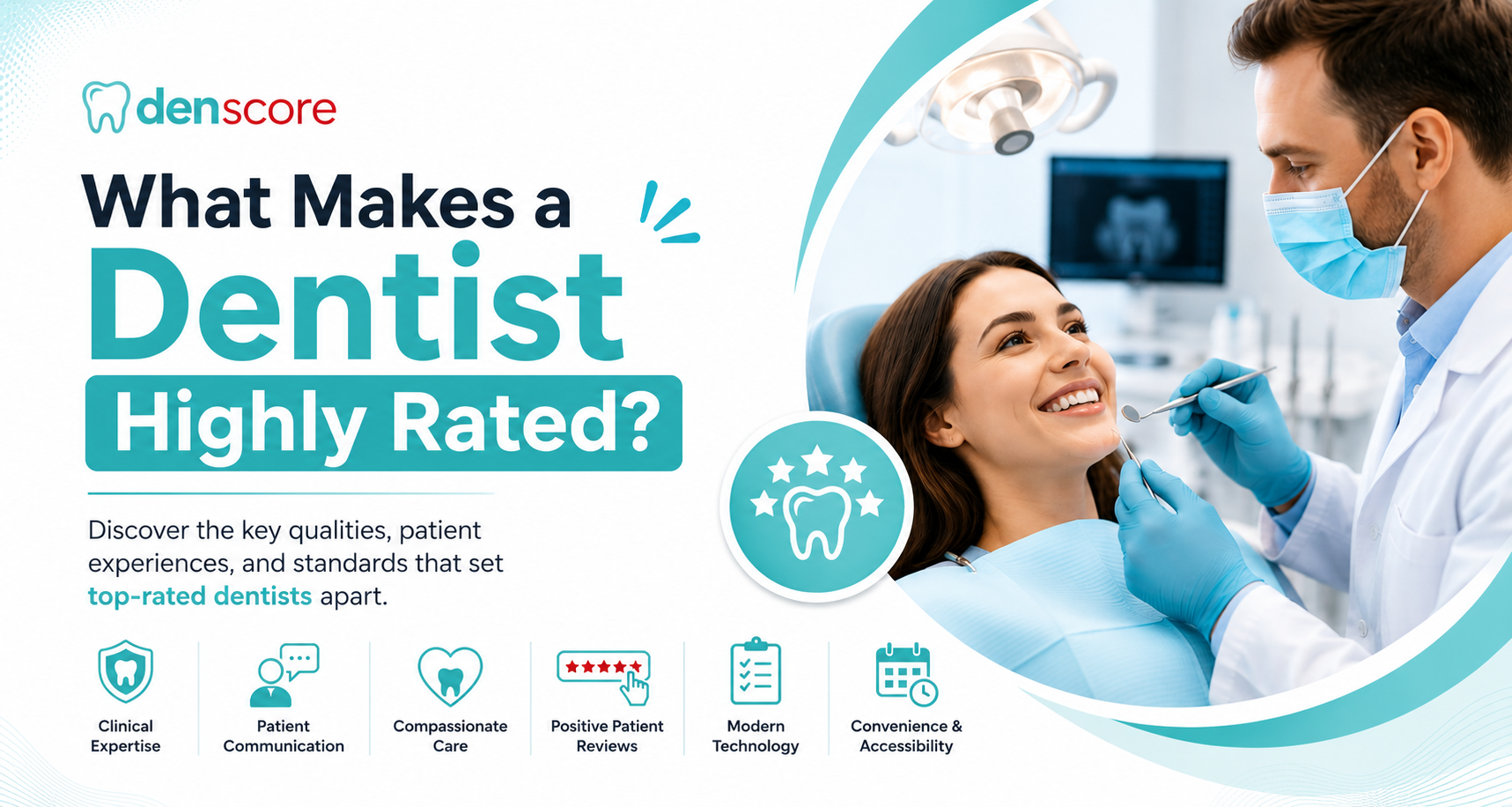
Typing “best dentist near me” into Google feels simple, until the results load and every practice claims to be five stars, award-winning, and “voted #1.” So what actually separates a genuinely highly rated dentist from a practice that just paid for good marketing? It comes down to a specific, checkable set of factors: verified credentials, consistent patient outcomes, transparent pricing, modern technology, and a real pattern of positive reviews over time, not just a star icon.
This guide breaks down exactly what makes a dentist highly rated, how directories and rating platforms calculate those scores, the red flags a high star rating can hide, and how to vet a provider before you book. If you’d rather skip the research and find the right dentist for you in minutes, DenScore’s free tool does the heavy lifting for you.
The stakes are higher than they used to be. Search results for dental care are crowded with directories, paid ads, and aggregator sites, and a growing share of patients now start their search inside an AI-generated answer rather than a list of blue links. That shift means the definition of “highly rated” has to hold up to more scrutiny than a five-star badge alone, it needs to be backed by verifiable data a search engine, an AI assistant, and a nervous patient can all trust at the same time.
What “Highly Rated” Really Means (Beyond Star Counts)
A five-star average sitting next to three reviews tells you almost nothing. A genuinely highly rated dentist has volume, recency, and consistency behind that number, dozens or hundreds of reviews collected over a sustained period, with a pattern that holds up across Google, Healthgrades, Zocdoc, and independent platforms rather than clustering suspiciously on just one site.
Patient trust in these signals has grown fast. According to a 2025 patient-experience survey from rater8, 84% of patients now check online reviews before choosing a new healthcare provider, and more than half read at least six reviews before making a decision. That means a “highly rated” label isn’t cosmetic it’s the primary filter most patients use before they ever pick up the phone. If you want to understand the full picture before booking, our guide on how to find the right dentist for you walks through the same criteria in more depth.

The Core Factors That Make a Dentist Highly Rated
Rating platforms and honestly, patients tend to weigh the same handful of factors, whether or not they realize it.
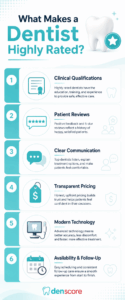
1. Clinical Qualifications and Continuing Education
A licensed dentist has completed a Doctor of Dental Surgery (DDS) or Doctor of Dental Medicine (DMD) program and holds an active state license, but the highest-rated providers go further: fellowships, board certifications in specialties like orthodontics or periodontics, and ongoing continuing education credits well beyond the state minimum. The American Dental Association maintains standards and resources patients can use to verify a dentist’s credentials and specialty training before booking, and most state dental boards publish license status and disciplinary history for free. On DenScore, you can see this kind of detail directly on dentist profiles inside our best dentist directories for cities across the country, so you’re not left guessing whether a “top dentist” badge actually reflects verified training.
2. Patient Reviews and Reputation Signals
Star ratings matter, but what patients say matters more. A highly rated dentist typically has reviews that specifically mention short wait times, clear explanations, gentle technique, and staff friendliness not just generic praise like “great dentist.” Practices that actively request and respond to feedback tend to earn more trust; patients increasingly expect providers to reply to both positive and negative reviews rather than staying silent. The volume and spread of reviews matter too a practice with strong ratings across Google, Healthgrades, and Zocdoc is a more reliable signal than one that only looks good on a single platform it controls. You can browse verified patient experiences yourself on our DenScore reviews page before choosing a provider.
3. Clear Communication and Chairside Manner
Dental anxiety is common, and one of the strongest predictors of a high rating is how well a dentist explains procedures, costs, and options before treatment begins. Patients consistently rate providers higher when they feel informed rather than rushed, and reviews mentioning “took the time to explain” or “answered all my questions” correlate strongly with repeat visits and referrals. Chairside manner also shows up indirectly in shorter recovery anxiety, better home-care compliance, and fewer canceled follow-ups. If dental anxiety is part of what’s holding you back from booking, our guide on overcoming dental anxiety covers practical ways to prepare for a visit, and our family dental tips page has advice for easing kids into appointments too.
4. Transparency on Pricing and Insurance
Highly rated dentists post or clearly explain their pricing, accepted insurance plans, and payment options instead of surprising patients at checkout. This is especially important as more practices shift away from traditional PPO networks; unexpected billing is one of the fastest ways a five-star practice collects one-star reviews. Transparent practices will typically walk you through in-network versus out-of-network costs, financing options, and what a specific procedure is likely to cost before you’re in the chair. If cost is a concern, see our breakdown of ways to save on dental care and how to find the right dental insurance for you.
5. Modern Technology and Treatment Options
Digital X-rays, intraoral scanners, same-day crowns, and laser dentistry aren’t just conveniences they reduce radiation exposure, shorten appointments, and improve diagnostic accuracy. Practices investing in current technology tend to earn stronger long-term ratings because outcomes and comfort both improve, and patients notice the difference between a rushed manual impression and a five-minute digital scan. This factor matters most for larger procedures dental implants, crowns, and orthodontic work all benefit from more precise imaging and planning. Our overview of how AI is transforming dental diagnostics explains where this trend is heading, and how 3D printing is also reshaping same-day dentistry.
6. Availability, Emergency Care, and Follow-Up
A dentist who offers same-week appointments, handles emergencies promptly, and follows up after procedures like extractions or root canals consistently earns better reviews than one who doesn’t. Availability is one of the most-cited reasons patients switch providers a highly rated dentist on paper isn’t much help if the next opening is two months out and there’s no emergency protocol for a cracked tooth on a weekend. Good practices also proactively confirm appointments, send aftercare instructions, and check in after major procedures like wisdom tooth extraction or a crown placement, which is one of the clearest signals of a patient-first practice culture.
How Rating Platforms and Directories Evaluate Dentists
Every platform weighs these factors slightly differently, but most combine some version of: average star rating, total review count, review recency, response rate to feedback, verified license status, and increasingly patient outcome data. Some platforms also factor in profile completeness (photos, bios, accepted insurance lists) and how quickly a practice responds to new patient inquiries, since slow response times correlate strongly with lower satisfaction even when clinical quality is high.
Directory-style platforms like DenScore go a step further by pairing review data with personalized matching, using a short questionnaire to connect patients with dentists suited to their specific needs insurance plan, location, treatment type, or comfort with anxiety-related accommodations rather than just showing a generic ranked list. That distinction matters more than it sounds: two patients searching “best dentist” in the same city can have completely different ideal matches depending on whether they need pediatric care, implant work, or simply the closest highly rated office to their home. You can try that process yourself at navigation.denscore.com or read more about how directory listings build trust with patients searching for care.
Why “Highly Rated” Doesn’t Always Mean “Easy to Find”
Here’s a gap most patients never think about: a genuinely excellent, highly rated dentist can still be nearly invisible online if their website and local listings aren’t optimized. Search visibility depends on consistent business information (name, address, phone number) across the web, regularly updated content, and structured data that helps both Google and AI-powered search assistants understand who the practice is and what it offers. This is exactly why some of the best-reviewed dentists in a city don’t appear on the first page of results, while a lower-rated practice with stronger digital marketing does.
References:
Research from the National Institute of Dental and Craniofacial Research and public health data from the CDC’s Division of Oral Health both point to the same underlying issue: patients often can’t act on quality care they can’t find. Directories that aggregate verified reviews, like DenScore’s best dentist near you city guides, help close that gap by surfacing highly rated dentists regardless of how well their individual website ranks.
Red Flags: What “Highly Rated” Does Not Guarantee
A high star rating is a strong signal, not a guarantee. A few things it can hide:
- Review gating or incentivized reviews some practices only ask satisfied patients to leave feedback, skewing the average.
- Outdated reviews a 4.9-star rating built mostly on reviews from five years ago doesn’t reflect the practice today.
- Narrow specialization mismatch a dentist can be highly rated for cosmetic work but not be the right fit for a complex root canal or oral surgery case.
- Insurance and network changes ratings don’t update in real time when a practice drops a PPO or changes billing practices; see our guide on in-network vs. out-of-network dentists to understand how this affects your final cost.
- Sponsored placement disguised as ranking some directories rank dentists by ad spend, not patient outcomes, so a “top pick” position can simply mean the practice paid for it.
- Generalist ratings applied to specialty work a practice that’s highly rated overall may have very few reviews for the specific procedure you need, like a bone graft or wisdom tooth surgery.
Knowing about common dental myths also helps here, a lot of misplaced trust (and distrust) in dentistry comes from misinformation that has nothing to do with a provider’s actual skill.
How to Vet a Highly Rated Dentist Before You Book
Before booking with any “top-rated” provider, it’s worth doing a five-minute check:
- Confirm the license is active in your state and review any board actions through your state dental board’s public lookup tool.
- Read the most recent 10–15 reviews, not just the overall average, paying attention to how recent they are and whether the practice responds to negative ones.
- Ask directly about pricing for your specific treatment and which insurance plans are accepted, since a rating says nothing about your out-of-pocket cost.
- Check whether the practice discusses treatment options clearly and helps you know if you’re getting the right treatment rather than pushing the most expensive option first.
- Look for specialty-specific reviews if you need a crown, implant, or root canal rather than a routine cleaning, since general ratings don’t always reflect specialty skill.
- Ask about their approach to preventive care, not just treatment, a practice that emphasizes regular cleanings and early intervention tends to have better long-term outcomes and fewer costly surprises.
Why Choose DenScore as the Best Dental Finder Platform
DenScore was built to solve the exact problem this article walks through: patients shouldn’t have to manually cross-reference five review sites and guess which “highly rated” claim is real. DenScore combines verified reviews, credential data, and a short guided questionnaire to match patients with dentists who actually fit their needs, whether that’s a specific insurance plan, a specialty procedure, or simply a provider known for a gentle chairside manner. Unlike directories that rank by ad spend, DenScore’s Best Dentist city guides and matching tool are built around patient outcomes and transparency first.
DenScore is led by CEO Dr. Kyle Gernhofer, DDS, a practicing dentist who built the platform to give patients an unbiased, clinically informed way to find trustworthy dental care instead of relying on paid placements. You can view his professional credentials on Zocdoc, connect with him on LinkedIn, or meet the rest of the team behind DenScore on our team page.
If you’re ready to find a provider who fits your needs rather than scrolling through unverified star ratings, try DenScore’s free dental finder tool today.
Frequently Asked Questions
What star rating should I look for in a dentist?
Most patients treat 4.0 stars and above as trustworthy, but the review count matters just as much as the score, a 4.8-star rating from 200+ reviews is far more reliable than 5.0 stars from three reviews.
Are online dentist reviews trustworthy?
Generally yes, especially on platforms that verify patient visits, but it’s worth reading recent written reviews rather than relying on the star average alone, since averages can be skewed by a small number of incentivized reviews.
How many reviews should a highly rated dentist have?
There’s no fixed number, but most patients look for at least 50–100 reviews with consistent ratings over the past one to two years as a sign of a stable, trusted practice.
Does a highly rated dentist always accept my insurance?
No, ratings and insurance participation are unrelated. Always confirm your specific plan is accepted before booking, especially since more dentists are dropping traditional PPO plans.
What makes a highly rated general dentist different from a specialist?
General dentists handle routine care like cleanings and fillings, while specialists (orthodontists, periodontists, oral surgeons) complete additional training for specific procedures, see our guide on what dental specialists do to know which one you need.
How does DenScore verify highly rated dentists?
DenScore combines license verification, aggregated patient review data, and a guided matching questionnaire so patients see dentists suited to their actual needs rather than a generic ranked list.
Can a highly rated dentist still be the wrong choice for me?
Yes. Ratings reflect overall patient satisfaction, but they may not fit your specific situation. A dentist could excel at cosmetic work but lack the right experience for pediatric or emergency care. Therefore, match the dentist’s credentials and reviews to your specific needs.
Why do some highly rated dentists not show up in search results?
Search visibility depends on website optimization and consistent online listings. Patient satisfaction alone does not determine rankings. As a result, an excellent dentist with a weak online presence may rank below a lower-rated competitor with stronger marketing. That is why directories and matching tools exist.