20 Feb
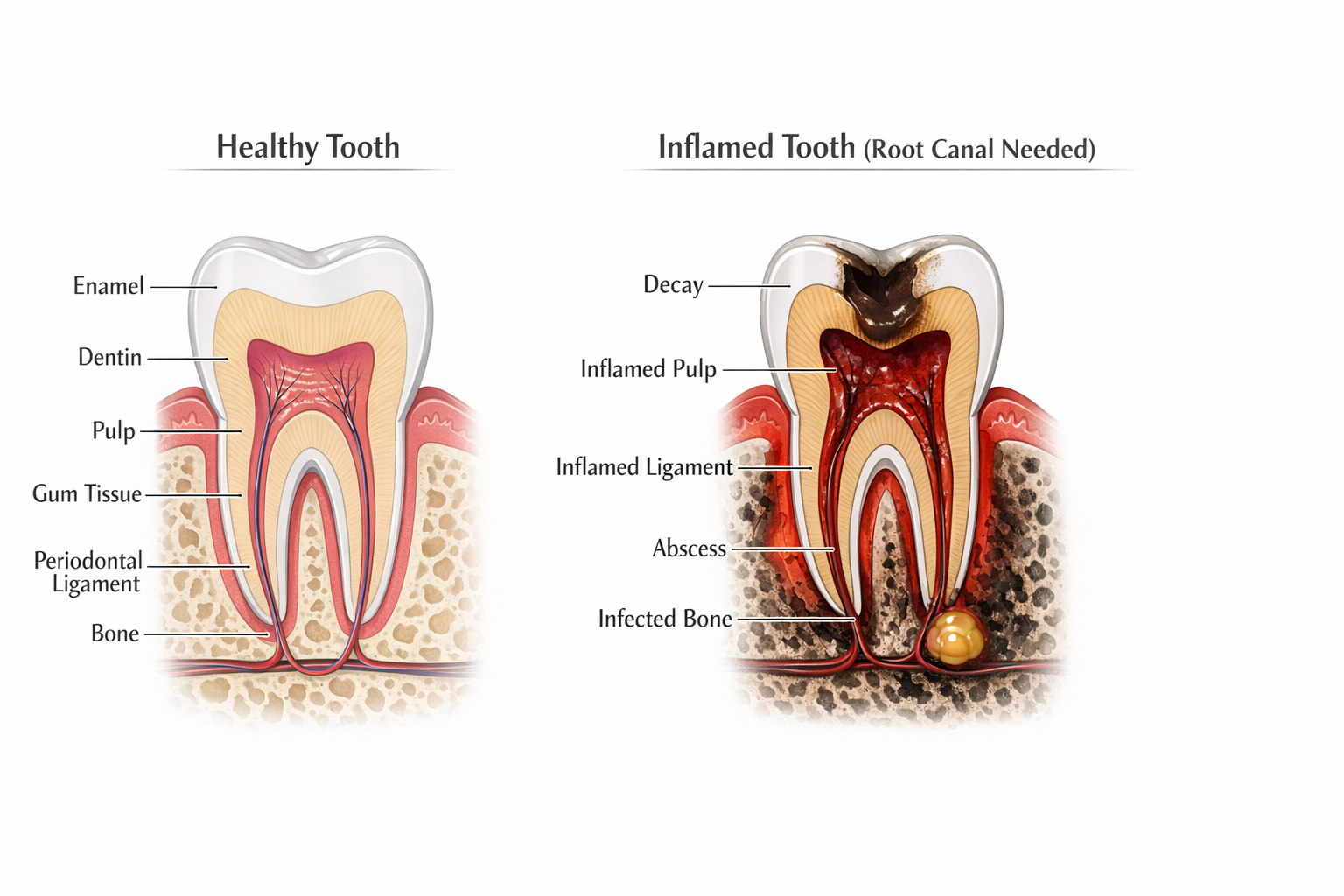
If you’ve ever had a severe toothache or been told you need a root canal, chances are your dentist referred you to a specialist, an endodontist. But what exactly is an endodontist, and how are they different from a regular dentist? This comprehensive guide answers every question you have about endodontists, root canal treatment, costs, and how to find the best endodontist near you in the USA using Denscore — a free online dental tool.
What Is an Endodontist?
An endodontist is a dental specialist who focuses exclusively on diagnosing and treating diseases and injuries that affect the dental pulp — the soft tissue inside your teeth containing nerves, blood vessels, and connective tissue. Endodontist word comes from the Greek words “endo” (inside) and “odont” (tooth).
Endodontists complete an additional 2–3 years of advanced postgraduate training beyond dental school, specializing entirely in root canal therapy, retreatment, endodontic surgery, and dental trauma. They are recognized by the American Association of Endodontists (AAE) as one of nine dental specialties officially recognized by the American Dental Association (ADA).
What Does an Endodontist Do?
Endodontists handle a wide range of complex dental procedures, primarily focused on saving teeth that would otherwise need to be extracted. Here are the core services they provide:
- Root Canal Treatment (RCT) — The most common endodontic procedure. The specialist removes infected or damaged pulp, cleans and shapes the root canals, and seals the tooth to prevent reinfection.
- Endodontic Retreatment — When a previous root canal fails or becomes re-infected, an endodontist can reopen the tooth, clean it again, and reseal it.
- Apicoectomy (Root-End Surgery) — A minor surgical procedure to remove the tip of the tooth’s root when infection persists after root canal treatment.
- Pulp Capping — A conservative treatment to protect exposed pulp and encourage healing before full pulp removal becomes necessary.
- Cracked Tooth Diagnosis and Treatment — Endodontists are skilled at identifying and treating cracked teeth that cause sharp pain when biting.
- Dental Trauma Treatment — Reattaching or treating teeth that are knocked out, loosened, or fractured due to accidents or sports injuries.
- Internal Tooth Bleaching — Treating discoloration from within teeth that have undergone root canal therapy.
Endodontist vs. General Dentist: Key Differences
Many patients wonder whether they should see their regular dentist or an endodontist for tooth pain. Here’s how they differ:
When Should You See an Endodontist?
You may need an endodontist if you experience any of the following warning signs:
- Severe, persistent toothache — especially pain that radiates to the jaw, neck, or ear
- Prolonged sensitivity to hot or cold temperatures even after the stimulus is removed
- Darkening or discoloration of a tooth, indicating dead or dying pulp
- Swollen, tender gums near a specific tooth, or a pimple-like bump (dental abscess) on the gums
- Pain when biting or chewing — especially sharp, shooting pain
- A previously treated root canal tooth that becomes painful again
- Facial swelling, fever, or a bad taste in the mouth — signs of spreading infection
- Tooth knocked out or loosened due to trauma or injury
Pro Tip: Do not ignore dental pain and hope it goes away. Untreated pulp infections can spread to the jawbone, neck, and even the brain, creating life-threatening conditions. Always see a dentist or endodontist promptly.
What Happens During a Root Canal? Step-by-Step
Root canal therapy is the most common procedure performed by endodontists. Despite its fearsome reputation, modern root canals are typically no more uncomfortable than getting a dental filling. Here’s what to expect:
- Step 1 – Diagnosis & X-Rays: Your endodontist takes digital X-rays or cone beam CT (CBCT) scans to assess the extent of infection and the shape of your root canals.
- Step 2 – Local Anesthesia: The area is numbed with a local anesthetic. Endodontists are experts at ensuring patients feel little to no pain throughout the procedure.
- Step 3 – Dental Dam Placement: A small rubber sheet (dental dam) isolates the tooth, keeping it clean and saliva-free during treatment.
- Step 4 – Access Opening: A small opening is drilled through the crown of the tooth to access the pulp chamber.
- Step 5 – Pulp Removal: Using tiny, precise instruments (often viewed under a dental microscope), the infected or inflamed pulp is carefully removed from all root canals.
- Step 6 – Canal Shaping & Cleaning: The canals are shaped, disinfected with antimicrobial solutions, and prepared for filling.
- Step 7 – Canal Filling: The canals are filled with a rubber-like material called gutta-percha, sealed with adhesive cement to prevent future infection.
- Step 8 – Restoration: A temporary or permanent crown is placed over the tooth to protect it and restore full function.
How Much Does an Endodontist Cost in the USA?
Endodontic treatment costs vary depending on the tooth involved, the complexity of the case, and your geographic location. Here’s a general cost overview for endodontic procedures in the United States:
Endodontic Procedures & Average Costs (USA)
$700 – $1,000
$800 – $1,100
$1,000 – $1,500
$1,000 – $1,700
$900 – $1,400
$1,000 – $1,800
Costs are approximate and may vary by location, provider, and complexity.
Most dental insurance plans cover 50%–80% of endodontic treatment when it is deemed medically necessary. Always verify your coverage before scheduling. Flexible Spending Accounts (FSA) and Health Savings Accounts (HSA) can also be used to offset costs.
Endodontist Education, Training & Credentials in the USA
Before trusting anyone with your teeth, it’s natural to want to know about their qualifications. Here’s the educational path every endodontist in the USA must complete:
Undergraduate Degree: 4 years — pre-dental or pre-med coursework (biology, chemistry, physics)
Dental School (DMD or DDS): 4 years — Comprehensive dental training and licensure
Endodontic Residency: 2–3 years — Specialty training focused exclusively on root canal procedures, microsurgery, dental trauma, and pain management
Board Certification (Optional but Prestigious): Diplomate status from the American Board of Endodontics (ABE) — demonstrates the highest level of expertise
State Licensure: All practicing endodontists must be licensed in the state where they practice
Continuing Education: Ongoing CE credits required to maintain licensure and stay current with the latest techniques and technologies
Common Myths About Endodontists & Root Canals — Debunked
Here are some common myths people often hear about endodontists and root canal treatment. Denscore helps provide accurate information.
Myth 1: Root canals are extremely painful
Modern root canal procedures are performed under effective local anesthesia and advanced numbing techniques. Most patients report no more discomfort than having a filling placed. The pain from the infection itself is far worse than the procedure.
Myth 2: It’s better to just pull the tooth
Saving your natural tooth is almost always the best outcome. Tooth extraction leads to bone loss, shifting teeth, bite problems, and additional costs for implants or bridges. Endodontists exist precisely to save teeth that might otherwise be lost.
Myth 3: Root canals cause illness
This myth, based on century-old and thoroughly debunked research, has no basis in modern science. The American Association of Endodontists and the ADA confirm that root canal treatment is completely safe and does not cause systemic disease.
Myth 4: You need multiple appointments
Many root canal procedures are completed in a single appointment — especially with an experienced endodontist using modern technology. Complex cases may require two visits.
Myth 5: A tooth without nerves is dead
A tooth that has had its pulp removed is still firmly rooted, nourished by surrounding tissues, and can function normally for many years — or even a lifetime — with proper care.
Advanced Technology Used by Endodontists Today
Modern endodontics is a technology-driven specialty. The best endodontists in the USA use cutting-edge equipment that makes procedures safer, faster, and more comfortable:
- Dental Operating Microscopes — Allow endodontists to see inside root canals at 25x magnification, dramatically improving precision and success rates.
- Cone Beam Computed Tomography (CBCT) — 3D dental X-rays that reveal the full anatomy of root canal systems, hidden fractures, and bone loss invisible on standard X-rays.
- Nickel-Titanium (NiTi) Rotary Instruments — Flexible, motor-driven files that clean and shape curved root canals far more effectively than hand instruments.
- Digital X-Rays — Lower radiation, instant results, and superior image quality compared to traditional film X-rays.
- Electronic Apex Locators — Precisely measure the length of root canals, eliminating guesswork and reducing procedural errors.
- Laser Endodontics — Laser energy can disinfect canals more thoroughly and may improve healing outcomes.
- Ultrasonic Instruments — Improve cleaning efficiency and help remove broken files or calcified canals.
How to Find the Best Endodontist Near Me in the USA — Free with Denscore
Finding a trusted, highly qualified endodontist near you used to mean relying on word-of-mouth, sifting through outdated directories, or hoping your dentist’s referral was the best option available. Now, there’s a smarter, faster way.
Denscore is a free online dental tool specifically built to help people across the USA find the best endodontist near them — quickly, confidently, and at zero cost.
What Is Denscore?
Denscore is a comprehensive, data-driven dental rating platform that aggregates dentist and specialist ratings, patient reviews, credentials, experience, and location data to help you make an informed choice — all for free. Whether you’re searching for a root canal specialist in New York, an endodontist in Los Angeles, a pediatric dental specialist in Chicago, or any other dental professional anywhere in the USA, Denscore’s intelligent search engine surfaces the most relevant, highest-rated endodontists in your area.
Why Use Denscore to Find an Endodontist?
- Completely Free — No subscriptions, no hidden fees. Denscore is 100% free to use for patients.
- Verified Credentials — Denscore helps surface endodontists with verified training, board certifications, and active state licensure.
- Real Patient Reviews — Read honest, unfiltered reviews from real patients to understand what to expect before your appointment.
- Location-Based Search — Find endodontists near your zip code, city, or state with interactive maps.
- Insurance Filter — Narrow your search to endodontists who accept your specific dental insurance plan.
- Appointment Availability — See which specialists have same-day or next-day appointment openings — critical when you’re in dental pain.
- Ratings Across Multiple Dimensions — Denscore rates dentists not just on patient satisfaction, but on communication, wait times, facility quality, and outcomes.
- Compare Specialists Side by Side — Evaluate multiple endodontists in one view to make the most informed decision for your oral health.
How to Use Denscore to Find an Endodontist Near You
- Visit Denscore: Go to the Denscore website — it’s completely free, no account creation required.
- Select ‘Endodontist’ or ‘Root Canal Specialist’: Use the specialty filter to narrow your search specifically to endodontists.
- Enter Your Location: Type your city, zip code, or simply allow location access for instant nearby results.
- Filter by Insurance, Rating & Availability: Use smart filters to match endodontists to your specific needs and schedule.
- Read Reviews & Compare: Review verified patient testimonials, credentials, office details, and ratings.
- Book Your Appointment: Contact the endodontist directly or use any available online booking integration.
Questions to Ask Your Endodontist Before Treatment
Once you’ve found a top-rated endodontist near you through Denscore, preparation is key. Here are the essential questions to ask during your consultation:
- Are you board certified by the American Board of Endodontics?
- How many root canals do you perform per week?
- Do you use a dental microscope for root canal procedures?
- What technology do you use (CBCT, rotary NiTi, apex locators)?
- How many appointments will this require?
- What is the success rate for this type of procedure?
- Do you offer sedation options for anxious patients?
- What is the total cost, and do you accept my insurance?
- What should I expect during recovery and aftercare?
- What happens if the root canal fails in the future?
Frequently Asked Questions About Endodontists
Q: How long does a root canal take?
A: A typical root canal takes 60–90 minutes for a single-rooted tooth. Molars with multiple canals may take 90–120 minutes. Most cases can be completed in one appointment.
Q: Is an endodontist more expensive than a dentist?
A: Specialist fees are slightly higher than general dentist fees, but the greater precision and success rates often mean fewer follow-up procedures, making endodontists a cost-effective long-term choice.
Q: Do I need a referral to see an endodontist?
A: Not always. While many patients are referred by their general dentist, you can self-refer to an endodontist. Using a tool like Denscore makes it easy to find and directly contact an endodontist near you.
Q: How long does recovery take after a root canal?
A: Most patients can return to normal activities within 24–48 hours. Mild soreness for 2–3 days is normal and typically managed with over-the-counter pain relievers.
Q: Can a root canal fail?
A: Root canals have a 95%+ success rate. However, in rare cases, reinfection can occur — especially if the crown is not placed promptly. Your endodontist may recommend retreatment in such cases.
Q: What is the difference between an endodontist and an oral surgeon?
A: An endodontist focuses on saving teeth by treating the interior (pulp and root canals), while an oral surgeon performs extractions, implant placements, jaw surgeries, and other invasive procedures. Both are dental specialists, but their scopes differ significantly.
Q: How do I find a good endodontist near me in the USA?
A: The fastest and most reliable way is through Denscore — a free online dental tool that aggregates verified credentials, patient reviews, and real-time availability for endodontists across the entire USA.
Conclusion: Your Oral Health Deserves the Best Specialist
An endodontist is not just a dentist who does root canals — they are a highly trained specialist dedicated to saving your teeth and eliminating pain at its source. With 2–3 additional years of specialty training, advanced microsurgical techniques, and state-of-the-art technology, endodontists achieve outcomes that general dentists simply cannot match for complex pulp and root problems.
Whether you’re experiencing a sudden toothache, dealing with a failed root canal, or simply want to be prepared, finding the right endodontist is critical. And now, it’s never been easier — thanks to Denscore, the free online dental tool trusted by patients across the USA to find top-rated, verified endodontists near them.